01 / THE CONSTRUCTION
Four materials.
One layup.
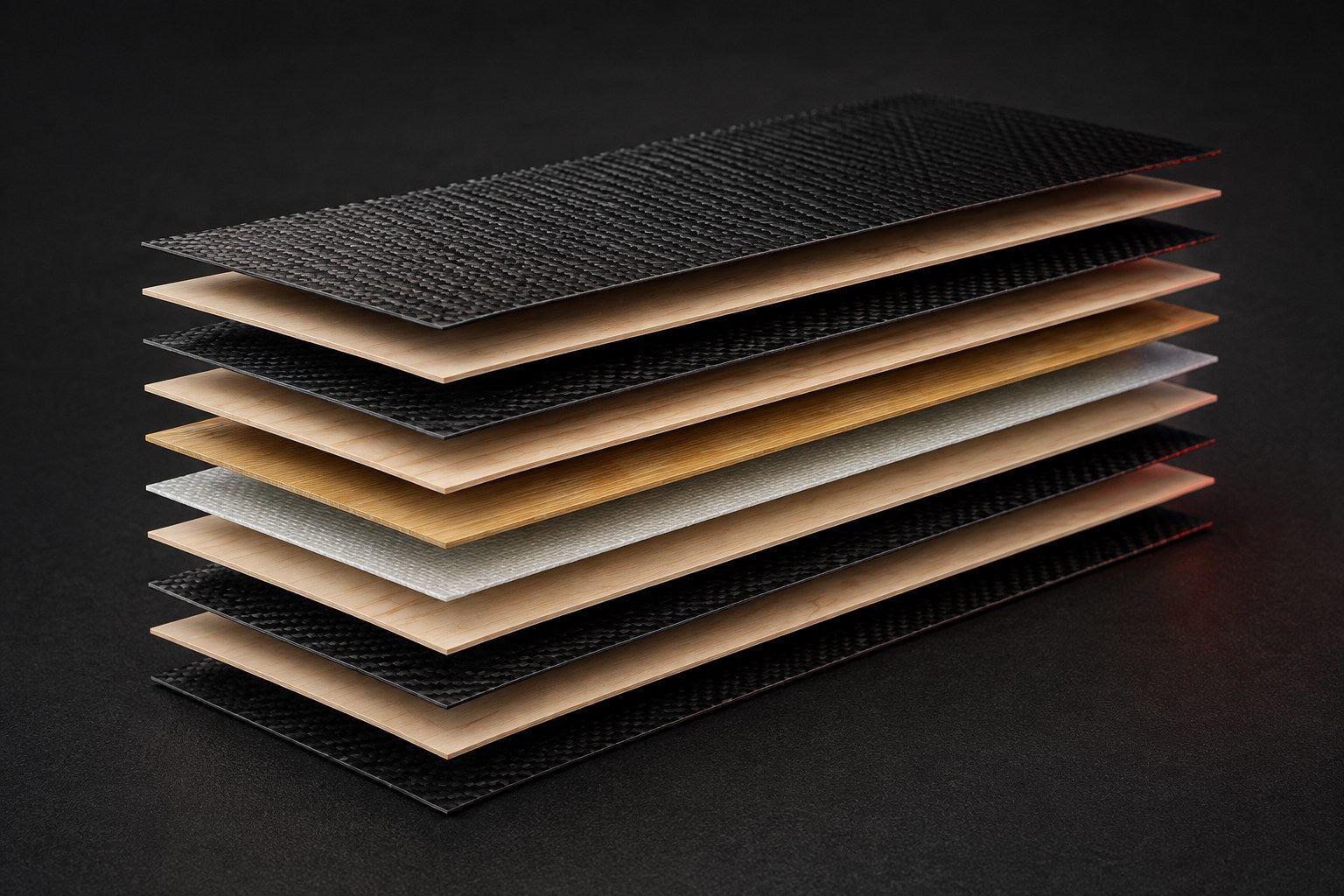
Carbon, maple, bamboo and fiberglass, arranged in ten layers.
STRATA SETS — 2 DECKS: SAVE CHF 20 / 3 DECKS: SAVE CHF 50. International shipping. Rates at checkout.

CORE PERFORMANCE TECHNOLOGY
From the material stack to your next session. Enter the lab. Find your shape. Make it yours.
Enter the lab ↗STANDARD V2.6 / CONSTRUCTION STUDY
01 / THE CONSTRUCTION
Carbon, maple, bamboo and fiberglass, arranged in ten layers.
02 / THE COMPARISON
3.65×Bending stiffness per millimetre, relative to the supplied Maple reference.
RLTH-supplied EI/mm values in millions of N·mm²/mm: 14.0 × 3.65 = 51.1. These are stiffness-per-thickness values, not breaking strength, weight efficiency or measured pop. The comparison applies to Standard V2.6; no matching V2 measurements are supplied for Apex or Flow. The layer image is illustrative and is not to scale.
Explore the technology and methodology ↗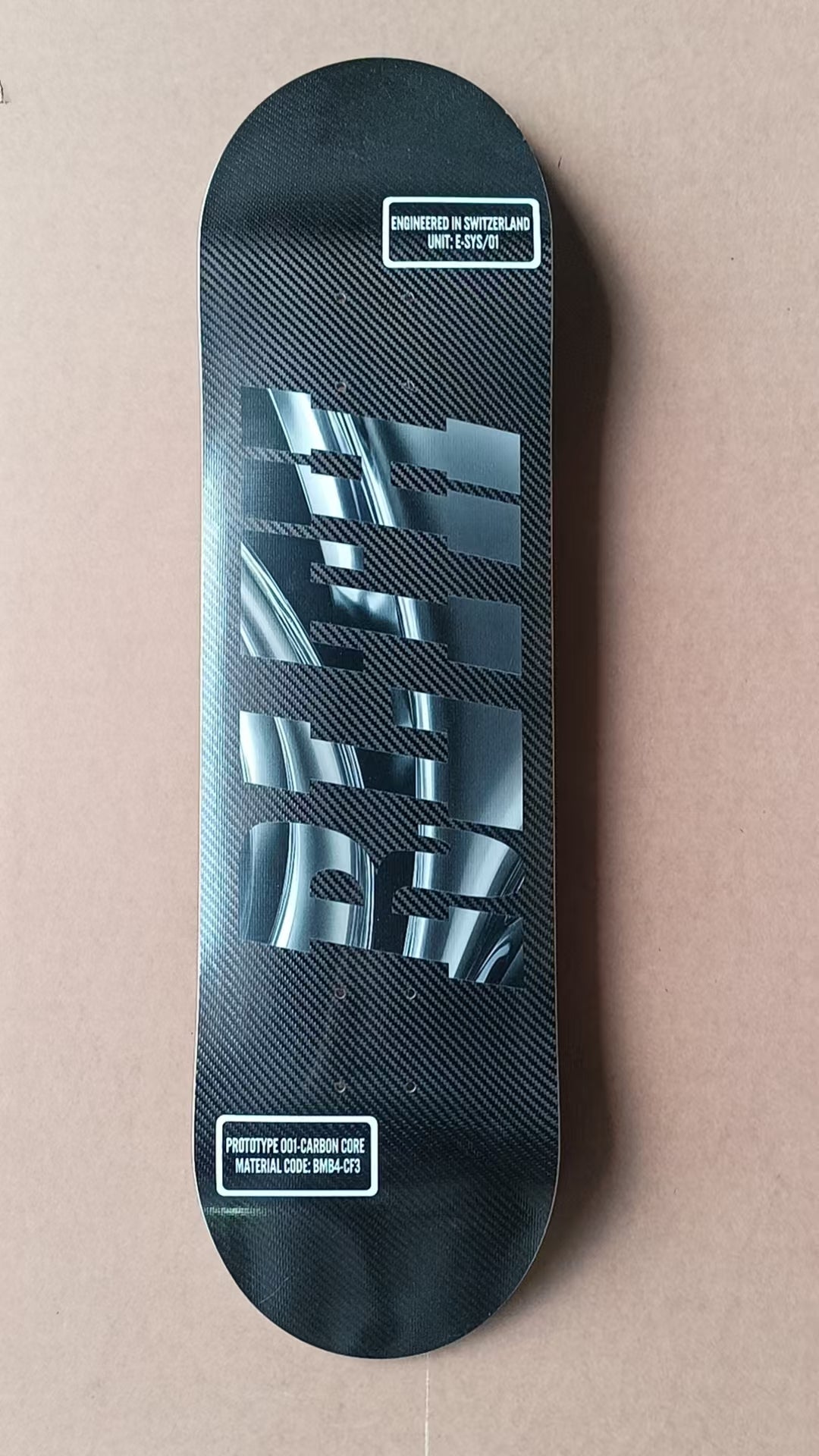
01 / STREET + PARK
A familiar shape for a session that goes everywhere.
CHF 121.95
Choose Standard ↗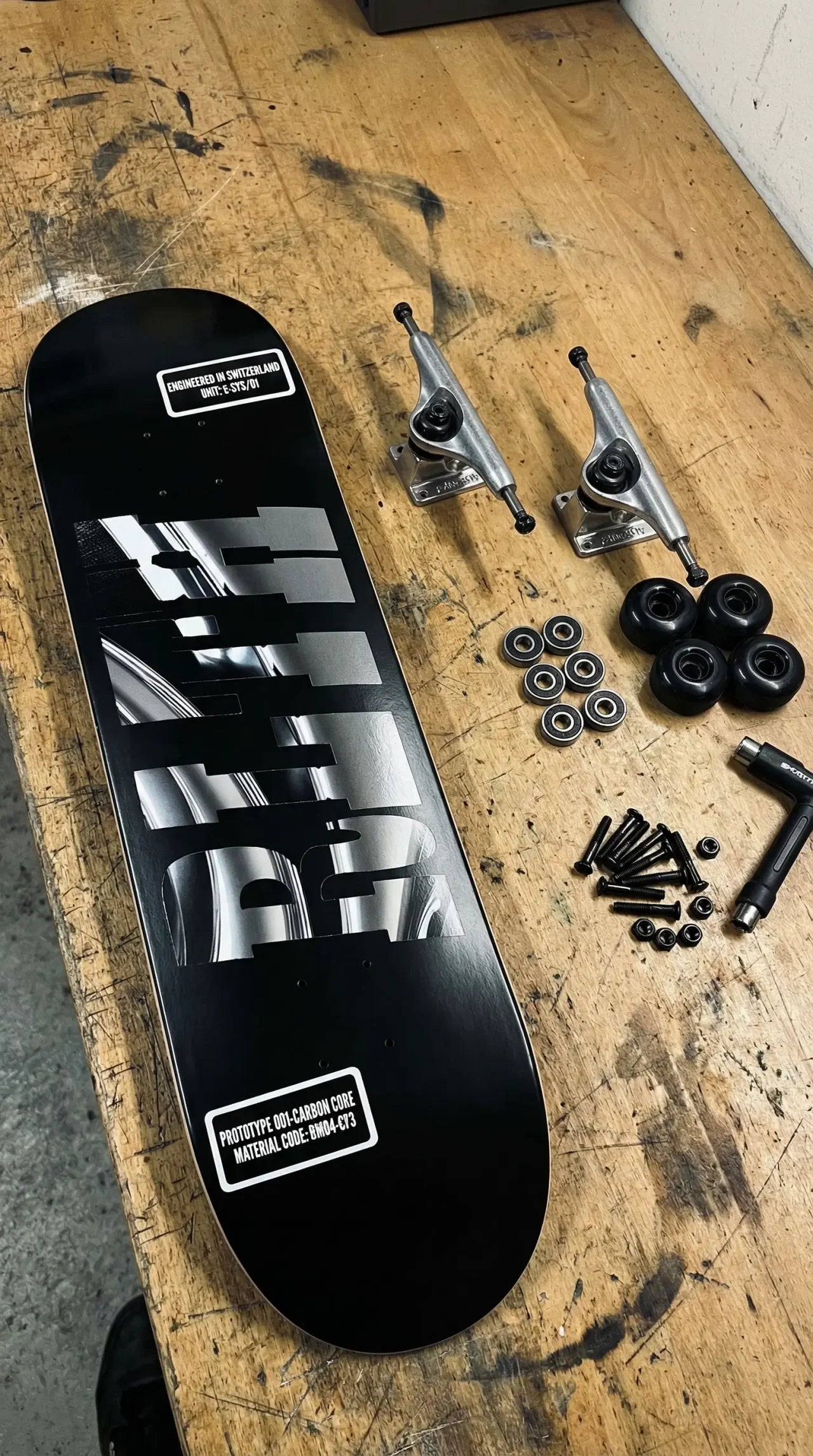
02 / TECHNICAL STREET
A pronounced concave for your street-focused setup.
CHF 126.95
Choose Apex ↗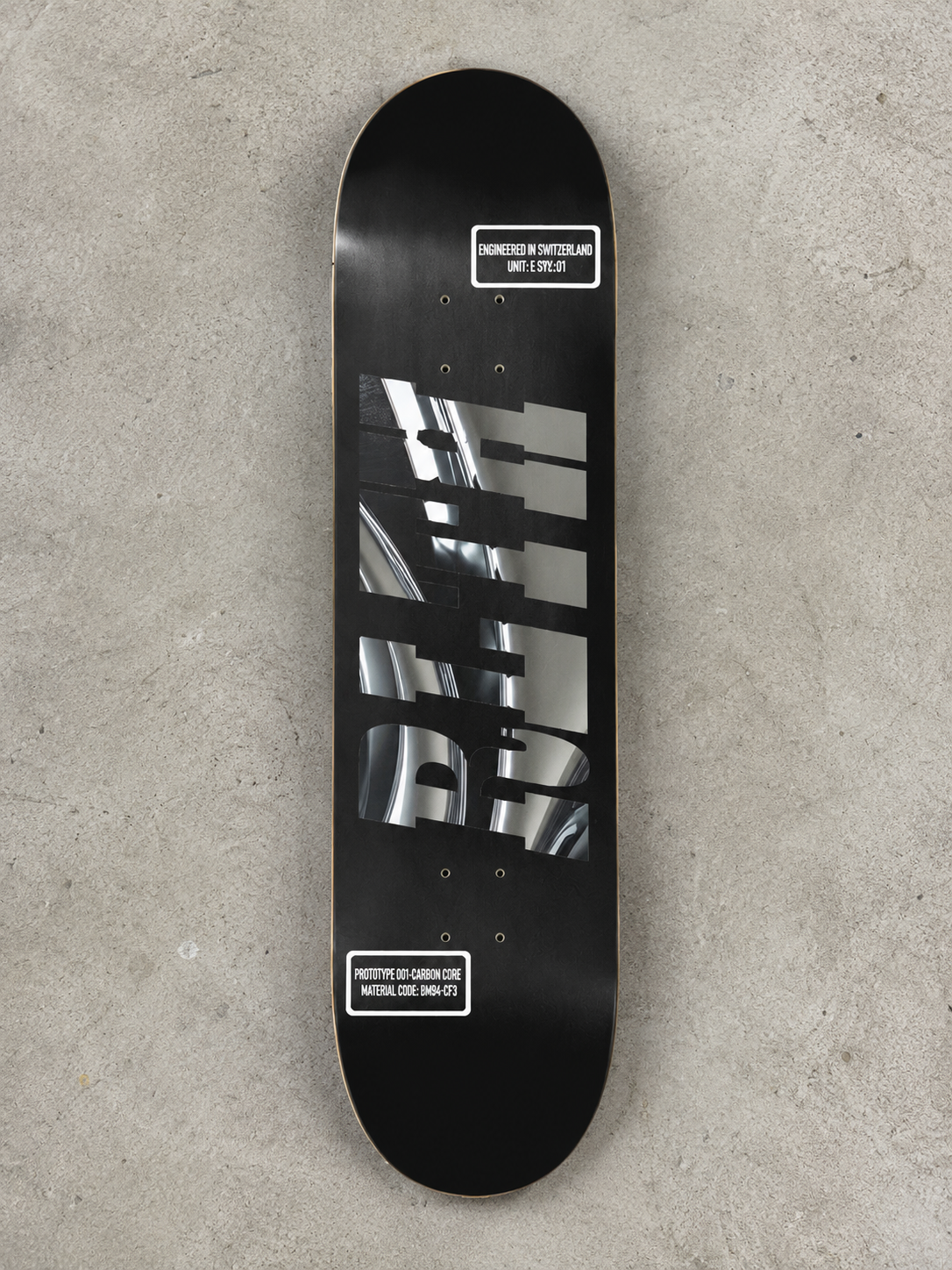
FROM MATERIAL TO MOVEMENT
Explore the material choices before putting the numbers in context.
01 / CARBON
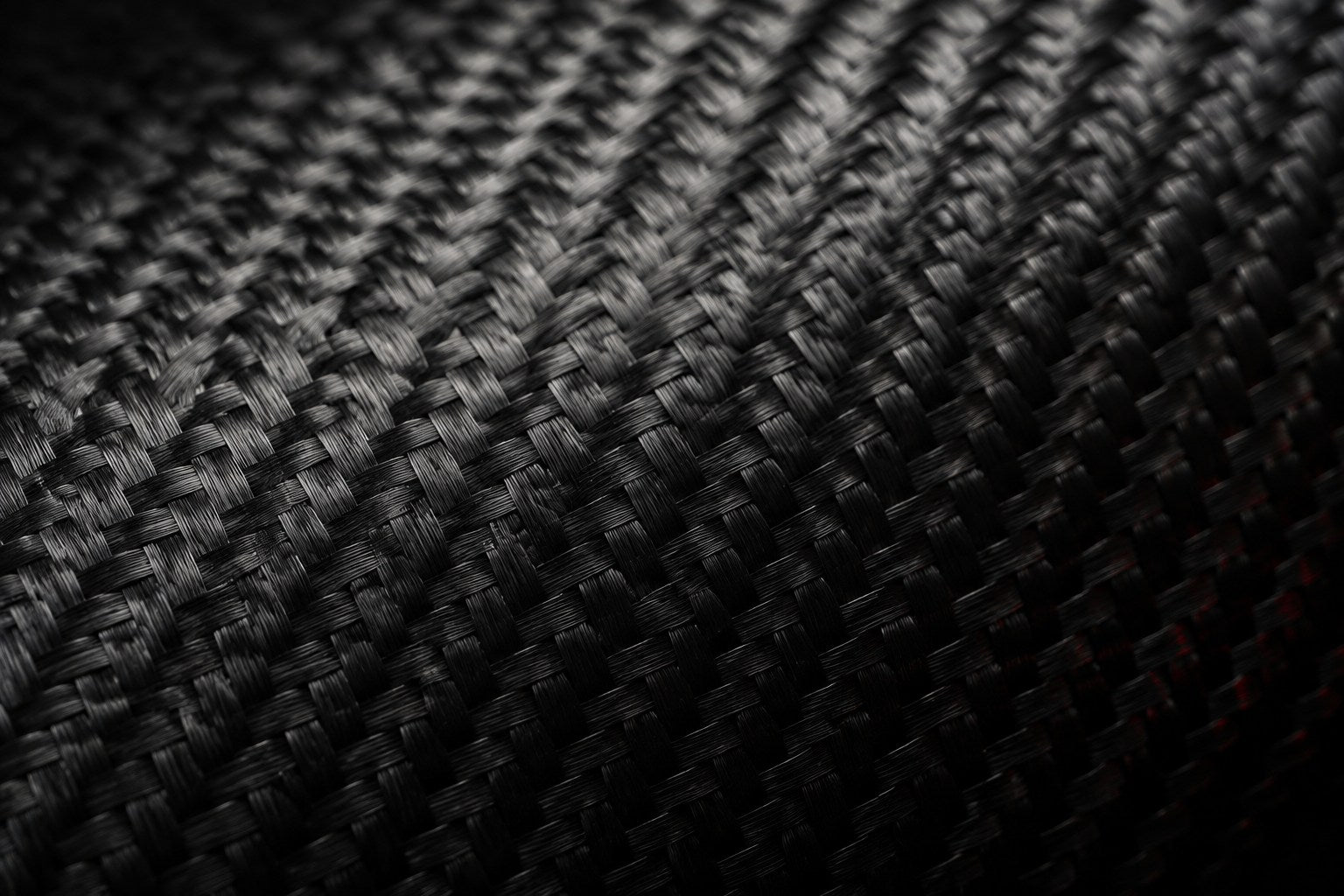
T300 carbon appears in the first and third layers of the supplied layup. Further carbon layers appear closer to the lower face. Open the construction study below to see their exact order.
Illustrative carbon-weave study. Fiber orientation and individual layer thicknesses are not specified.02 / THE LAMINATE
Maple separates several carbon layers. Bamboo sits in the fifth position, followed by fiberglass. Each material has a place in the same laminated construction.
Exploded material study; spacing is enlarged for clarity.03 / BENDING + TORSION
Bending and twisting are different movements. A single number cannot describe both. Use the material test bench, then switch between the two comparison views.
Illustrative bending and torsion study, not a photograph of a measured test.Our core performance technology. Engineered around the way a deck bends and twists.
Illustrative deformation. No applied force, angle or measured displacement is implied.
BEHAVIOUR / MATERIAL
A laminated material can resist bending and twisting in different ways. Use the controls to explore the two movements.
Ratios supplied by RLTH for HybridCore V2.6 relative to Maple. Test methodology and conditions are not yet published here.
HYBRIDCORE / THE MATERIAL MINDSET
Carbon, maple, bamboo and fiberglass. Ten thin layers in the supplied V2.6 construction. This is a closer look at the material system, the two stiffness measures and the shape that fits your skating.
CONSTRUCTION / LAYER BY LAYER
Explore the HybridCore V2.6 layup, from the top face to the bottom face. The drawing separates the thin layers so each material can be inspected.
Layer 1 of 10, counted from the top face. T300 carbon.
Layer 2 of 10, counted from the top face. Maple.
Layer 3 of 10, counted from the top face. T300 carbon.
Layer 4 of 10, counted from the top face. Maple.
Layer 5 of 10, counted from the top face. Bamboo.
Layer 6 of 10, counted from the top face. Fiberglass.
Layer 7 of 10, counted from the top face. Maple.
Layer 8 of 10, counted from the top face. Carbon.
Layer 9 of 10, counted from the top face. Maple.
Layer 10 of 10, counted from the top face. Carbon.
Conceptual construction diagram. Layer thicknesses are not to scale.
Carbon, bamboo, maple and fiberglass. Explore HybridCore V2.6 through two different measures of stiffness.
EI/mm relative to standard Maple
Resistance to twisting, relative to Maple
| Deck | EI/mm | Torsion |
|---|---|---|
| Standard V2.6 | 51.1 | 13× |
| Powell Flight | 25.4 | Not supplied |
| Kape Vanguard | 34.3 | Not supplied |
| DBX Basalt | 35.9 | Not supplied |
| Standard 7-ply Maple | 14.0 | 1× |
EI describes bending stiffness. Dividing EI by construction thickness gives the efficiency per millimetre used here. This is a thickness-normalized comparison; it does not measure weight efficiency, breaking strength or pop.
Torsional stiffness describes resistance to twisting. Maple is the reference at 1×. The supplied Standard V2.6 ratio is 13×. Values for the other constructions are not available, so no points are plotted for them.
Each dot is one deck's supplied value. Dots further to the right have a higher value on the selected scale. Decks can be selected independently. The fixed scale stays the same when a deck is hidden, and missing measurements are never treated as zero.
Comparison values supplied by RLTH. HybridCore EI/mm uses the Maple reference multiplied by 3.65. Torsion is a separate ratio.
EI/mm is displayed in millions of N·mm²/mm. HybridCore's 51.1 is normalized from the Maple reference 14.0 × 3.65. Test setup, sample counts and measurement uncertainty are not published here.
01 / HYBRIDCORE V2.6
The supplied layup combines carbon, maple, bamboo and fiberglass. Explore each layer in the construction study.
02 / POWELL FLIGHT
Maple, AirLam and fiberglass in the supplied comparison dataset. Toggle both decks to inspect their EI/mm values side by side.
YOUR TERRAIN / YOUR SHAPE
Compare the shapes, or answer seven questions to find your HybridCore starting point.
01 / RIDER PROFILE
For a street-focused profile: ledges, rails and technical sessions. Explore the more pronounced concave if a locked-in shape is what you enjoy.
02 / RIDER PROFILE
For a freestyle-focused profile: flat-ground combinations, footwork and smooth transitions between tricks. Explore a mellower shape.
03 / RIDER PROFILE
For a mixed-terrain profile: street one day, park the next. A familiar shape is the starting point for an adaptable everyday setup.
RIDER / SETUP · 7 QUESTIONS
Answer 7 quick questions about your style, terrain, and preferences. Find your starting point: Apex for street performance, Flow for freestyle, or Standard for mixed terrain.
01 — Discipline
02 — Style
03 — Priority
04 — Terrain
05 — Feel
06 — Level
07 — Width
Your Match
Apex — Street performance, with a more pronounced concave.
Flow — Freestyle and technical flat-ground skating, with a mellower shape.
Standard — An adaptable starting point for street, park and mixed terrain.
Your answers indicate a preference, not a measured performance score. Check the selected product's size and shape before choosing.
OUTSIDE THE LAB

READ THE DETAILS
The comparison divides bending stiffness EI by construction thickness. It is not a measure of stiffness per unit weight, breaking strength or pop.
RLTH supplied the normalized HybridCore value as 14.0 × 3.65 = 51.1. The chart displays EI/mm in millions of N·mm²/mm. The methodology panel contains the data notes.
Torsion values were supplied for HybridCore and Maple only. The other constructions remain labelled as unavailable instead of being plotted at zero.
No single recommendation covers every preference. Use the Finder to explore Apex, Flow and Standard, then check the current product page for size and shape.
Yes. The construction study shows all ten layers in top-to-bottom order. The drawing separates the layers so they are readable; their displayed thicknesses are not to scale.
CORE PERFORMANCE TECHNOLOGY
The next step is yours. Explore the available HybridCore models and choose the shape for your next session.
Explore HybridCore ↗


